Alexandre Padilha formalized the creation of the Global Coalition, which aims to expand local and regional production of health technologies through the development of innovative treatments
By Cecília Lopes, Brazil’s Ministry of Health, Published on 21/05/2025 at 14:14, Updated on 23/07/2025
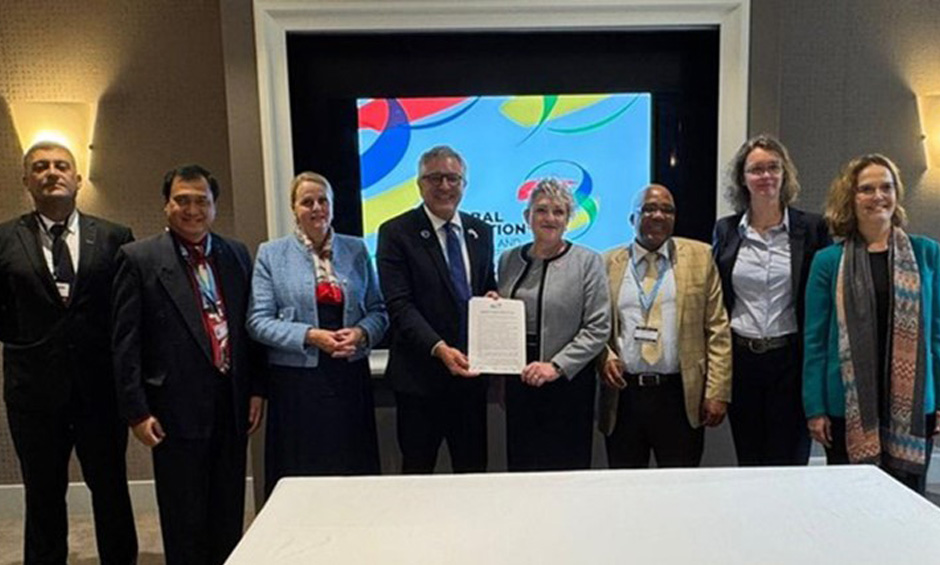
The Global Coalition for Local and Regional Production, Innovation and Equitable Access has been officially established. Formalized through the Geneva Charter, presented by Minister of Health Alexandre Padilha this Tuesday (20) at the 78th World Health Assembly, the Coalition seeks to expand local and regional production of health technologies. This initiative represents the main deliverable of Brazil’s G20 presidency in the health sector. Brazil, France, the United Kingdom, the European Union, Turkey, Germany, Indonesia, and South Africa signed the charter as founding members. The first project will be dedicated to developing innovative treatments to combat dengue.
“The Coalition represents a unique opportunity to promote access to vaccines, therapies, diagnostics, and other health technologies focused on neglected diseases and vulnerable populations, while also building capacities that can be leveraged for other diseases and future health emergencies,” Minister Padilha said during the launch speech in Geneva, Switzerland.
He explained that the Coalition will operate through projects. “We want to demonstrate that, through cooperation, it is possible to address this and other challenges, making the world better prepared for future public health emergencies. The pilot project will focus on dengue, a viral disease that for years has affected tropical countries such as Brazil and that, due to climate change, is currently spreading to other regions of the world,” he said.
Padilha also explained that subsequent projects will be jointly developed based on the demands of member countries, partners’ expertise, and regional realities.
Strengthening health product manufacturing capacities
During the first two years, Brazil will assume the presidency and secretariat of the Coalition, which will seek to strengthen local and regional health product manufacturing capacities and promote sustainable global production and innovation networks. The Coalition is structured around voluntary partnerships and concrete projects, involving G20 countries, invited countries, and international organizations, including a formal invitation to the World Health Organization (WHO) for technical and scientific support.
In Brazil, coordination of the agenda will be led by the Ministry of Health through the Secretariat of Science, Technology and Innovation for the Health Economic-Industrial Complex (SECTICS), which will serve as the national focal point. The Secretariat will work with technical and political partners to help advance strategic projects at the regional and global levels.
“The Coalition is an unprecedented international arrangement that marks a milestone in addressing inequalities. We will seek to align productive capacity, technology transfer, and structured demand, promoting equitable access to health technologies based on regional priorities and technical evidence,” said SECTICS Secretary Fernanda De Negri.
In addition to promoting access to vaccines, therapeutic treatments, diagnostics, and other health technologies for neglected diseases and vulnerable populations, the Coalition may be redirected to other diseases and health emergencies if necessary, fostering collaboration and avoiding duplication with multilateral initiatives and other relevant projects.
Regulation of digital marketing of breast-milk substitutes
On Wednesday (21), Brazil co-sponsored the event “Monitoring Digital Marketing of Breast-Milk Substitutes: Open Data and Global Accountability” during the 78th World Health Assembly. The initiative is part of an effort led by Brazil and Mexico to approve an international resolution on the topic at this meeting.
“Brazil believes that guaranteeing women’s right to breastfeed and children’s right to be breastfed is fundamental to building healthier, fairer, and more resilient societies. We cannot allow commercial interests to undermine one of the most natural and beneficial acts of human life,” Minister Alexandre Padilha stated.
The proposal will update the International Code of Marketing of Breast-Milk Substitutes, in force in Brazil since 1988, with specific rules for digital marketing. The text is the result of four rounds of dialogue among countries and extensive engagement with civil society, and already has the support of more than 20 nations. In addition to measures to restrict digital marketing of these products, the resolution recommends that countries strengthen their monitoring systems using open data and digital technologies, avoid conflicts of interest, and ensure full implementation of the Code.