
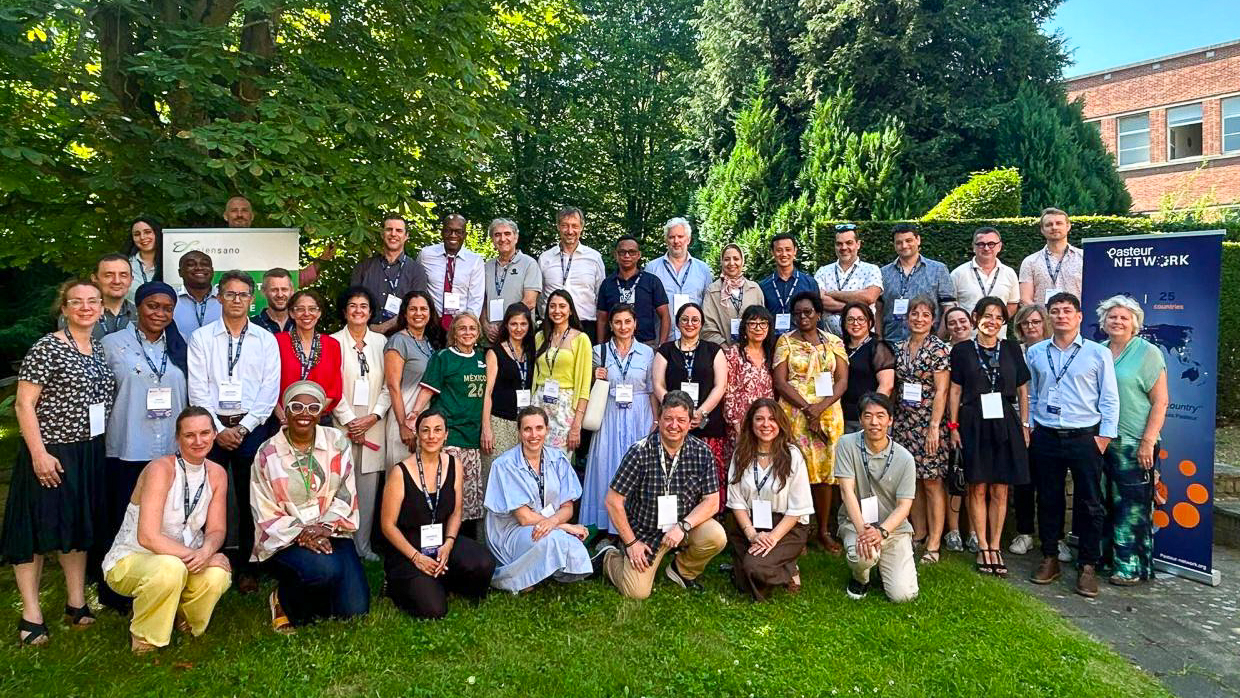
Greater coordination among international dengue initiatives is creating new opportunities to strengthen research, innovation, local and regional production, and equitable access to health technologies, the Global Coalition for Local and Regional Production, Innovation and Equitable Access said on 25 June.
Speaking during the External Landscape: Coordination, Priorities and Opportunities for Collaboration in Dengue and Arbovirus Research & Response session at the Pasteur Network Scientific Convening, hosted by Sciensano in Brussels, Belgium, Paula Reges, Special Advisor to the Global Coalition, emphasized the importance of connecting global initiatives and translating collaboration into practical implementation.
The session brought together representatives from Collective Action on Dengue (CAD), the WHO Global Arbovirus Programme, the Collaborative Open Research Consortium (CORC) Flaviviridae, the Dengue Alliance represented by DNDi (Drugs for Neglected Diseases initiative), and the Global Coalition to discuss the evolving international landscape for dengue and arbovirus preparedness.
The discussion focused on identifying implementation gaps and opportunities for stronger alignment across initiatives.
From coordination to implementation
Representing the Global Coalition, Reges highlighted that while scientific advances and international partnerships have expanded significantly in recent years, greater efforts are needed to connect research, production and access.
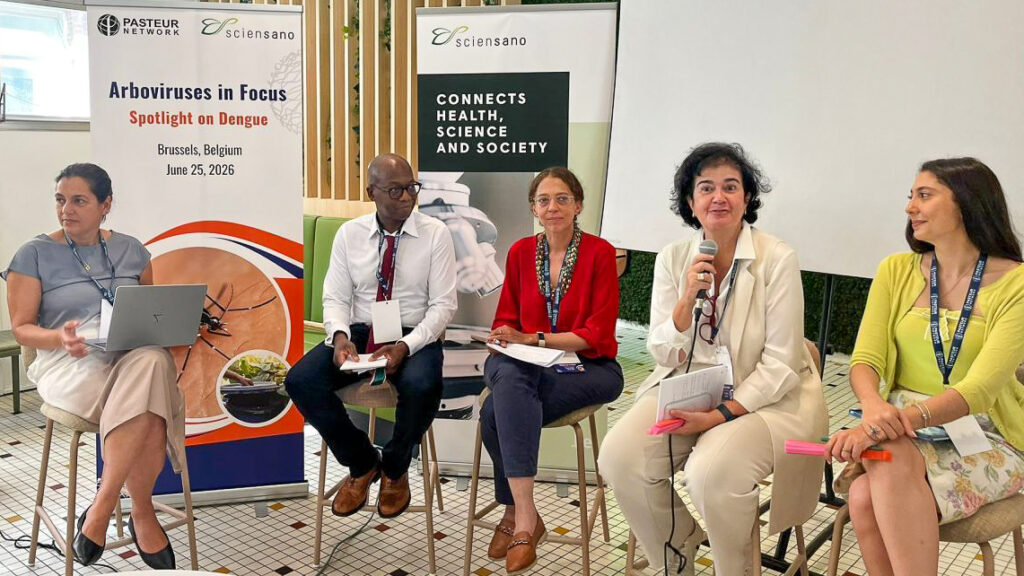
Pasteur Network Scientific Convening: Arboviruses in Focus — Spotlight on Dengue. Photo credit: Pasteur Network
She stressed that strengthening local and regional production should be considered from the earliest stages of innovation, ensuring that promising health technologies can be developed, manufactured, scaled and made accessible in the regions where they are most needed.
Paula Reges underscored that the increasing number of global initiatives dedicated to dengue creates a unique opportunity to strengthen collaboration rather than duplication.
Bringing together organizations working across research, surveillance, advocacy, product development, manufacturing and implementation, the session demonstrated growing alignment among multilateral strategies aimed at accelerating collective action against dengue.
A shared platform for collaboration
The event also highlighted the strong engagement of organizations that are members of the Global Coalition’s Advisory Committee.
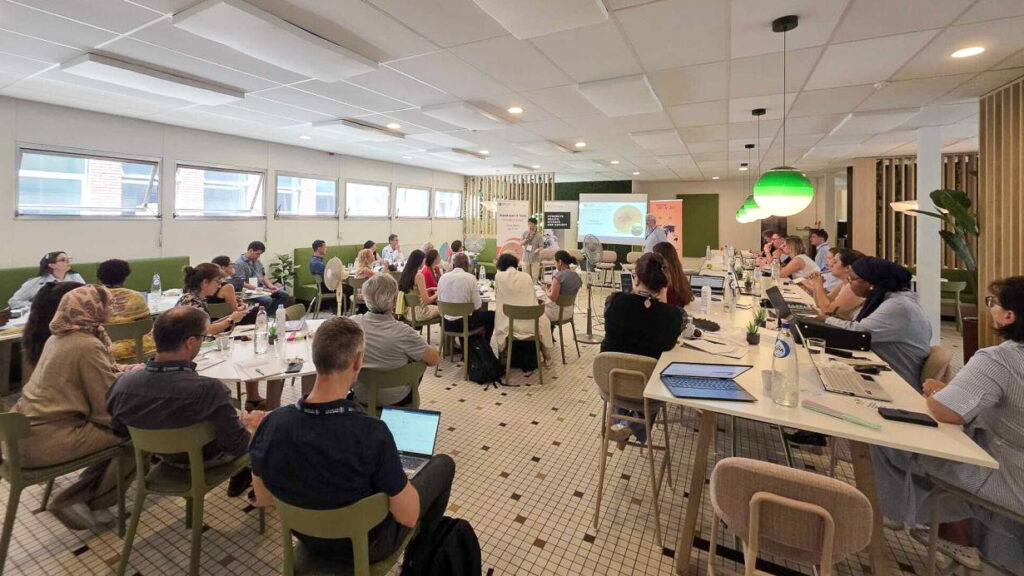
Pasteur Network Scientific Convening: Arboviruses in Focus — Spotlight on Dengue. Photo credit: Pasteur Network
Representatives from the WHO Global Arbovirus Programme, the Dengue Alliance represented by DNDi, FIND through Collective Action on Dengue (CAD), and the Pasteur Network participated in the discussion, reflecting the Coalition’s role in fostering dialogue and collaboration across the global dengue ecosystem.
The scientific convening also provided an opportunity to present international collaboration opportunities directly to researchers, product developers and leaders of research institutes, many of them based in the Global South.
Global Call for Proposals on Dengue
The Global Coalition is currently accepting submissions for its first Global Call for Proposals on Dengue, which seeks to support collaborative initiatives that strengthen local and regional capacities for research, development, production and equitable access to health technologies.
The deadline for submissions is 31 July 2026 (10 p.m. GMT). Find out more: https://globalcoalitionforlocalproduction.org/projects.
About the Global Coalition
The Coalition is one of the most important outcomes of Brazil’s G20 Presidency.
The signing of the Geneva Charter on May 20, 2025 – during the 78th World Health Assembly – which officially established the Global Coalition for Local and Regional Production, Innovation and Equitable Access, was a key milestone in bringing forward urgent issues that address several interconnected challenges.
These include the concentration of scientific capacity, research and development (R&D), and production in the life sciences, technology, and health sectors in a small number of countries; fragile supply chains; regulatory asymmetries; and the limited integration between innovation, production, and access, particularly in low- and middle-income countries.
The initiative emerges within this context and from a commitment to addressing health inequities exacerbated by the COVID-19 pandemic.
It advances a new model for the production of and access to essential health technologies – such as vaccines, therapies, and diagnostics – particularly for neglected diseases and populations living in vulnerable conditions globally, especially in Latin America, the Caribbean, and other developing regions.
The Coalition is led by the Ministry of Health of Brazil, with the Executive Secretariat hosted by Fiocruz.