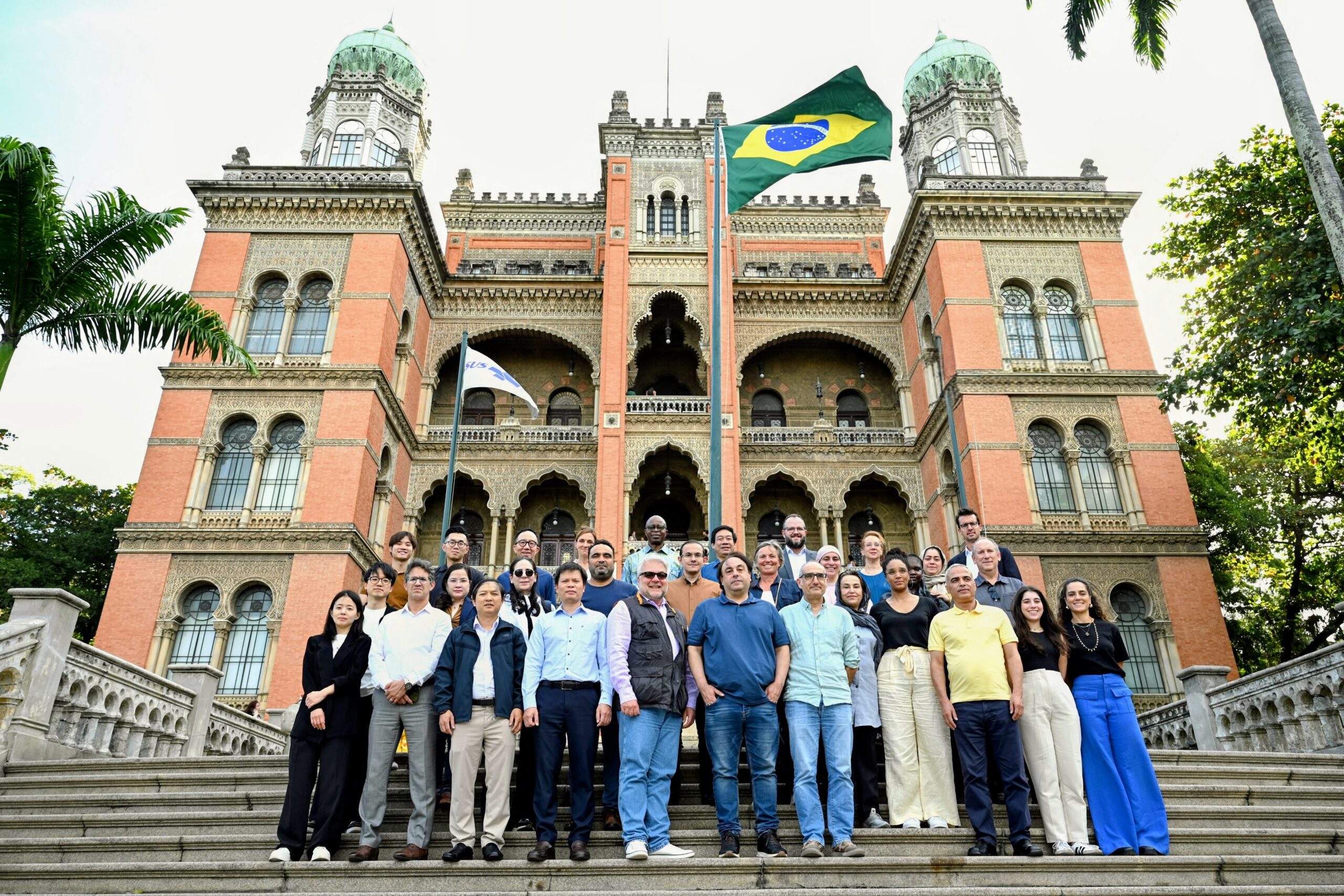
More than 50 experts from vaccine manufacturers, research institutes, philanthropic organizations and global health partners gathered in Rio de Janeiro, Brazil, on 21–22 July for the Pasteur Network Vaccine Manufacturing Initiative (PN-VMI) meeting, co-hosted by the Pasteur Network and Fiocruz with support from Wellcome Trust.
The event brought together representatives from institutions across Africa, Asia, Europe and Latin America – including the Global Coalition for Local and Regional Production, Innovation and Equitable Access – to strengthen collaboration on vaccine research and development, manufacturing, clinical trial networks and equitable access to health technologies.
Opening the meeting, Mario Moreira, Executive Secretary of the Global Coalition and President of Fiocruz, welcomed participants and stressed that scientific cooperation has become more important than ever amid growing global health challenges.
Reflecting on lessons learned from the COVID-19 pandemic, he emphasized that resilient regional manufacturing capacity, sustained investment and trusted international partnerships are essential to improve preparedness for future health emergencies.
He also highlighted the Global Coalition for Local and Regional Production, Innovation and Equitable Access as one of the initiatives helping strengthen coordination across the global health ecosystem and encouraged participants to deepen collaboration with the Coalition.
Rebecca Grais, Executive Director of the Pasteur Network, underscored the importance of the Vaccine Manufacturing Initiative in bringing together vaccine manufacturers and research institutions to jointly develop solutions for high-burden and neglected diseases.
She noted that the initiative aims not simply to expand manufacturing capacity, but to advance health sovereignty through stronger local, national and regional production systems.
Grais also reaffirmed the Pasteur Network’s commitment to the Global Coalition, highlighting the shared vision of strengthening equitable access to health technologies through international solidarity and collaboration.
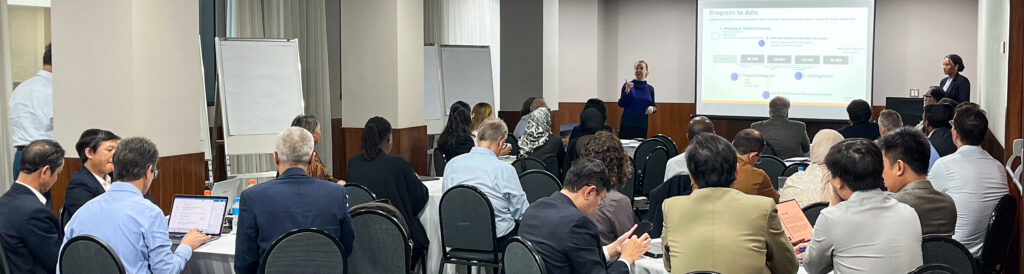
Participants engage in discussions during the Pasteur Network Vaccine Manufacturing Initiative (PN-VMI) meeting in Rio de Janeiro, exchanging experiences and exploring opportunities to strengthen collaboration on vaccine research, manufacturing and equitable access to health technologies. Photo credit: Gustavo Barreto/Global Coalition
The Global Coalition’s Assistant Executive Secretary, Marco Nascimento, presented the Coalition’s work. He emphasized the strong alignment between the Coalition and the Pasteur Network, particularly in advancing South-South cooperation, and highlighted one of the Coalition’s emerging priorities: strengthening regional coordination of production ecosystems and value chains to ensure manufacturing capacity responds effectively to public health needs.
He also invited participants to contribute to future Coalition initiatives addressing neglected diseases and other health challenges where access remains limited.
Over the two-day meeting, participants exchanged experiences and explored opportunities for collaboration across the vaccine development ecosystem.
Presentations highlighted regional manufacturing initiatives, advances in mRNA technologies, strategies to strengthen clinical trial networks, technology transfer, workforce development and preparedness for future outbreaks.
Representatives from organizations including the Coalition for Epidemic Preparedness Innovations (CEPI), the International Vaccine Institute (IVI), Africa CDC, the Regional Center for Innovation in Vaccines and Biopharmaceuticals (CRIVB), Sinergium Biotech and Fiocruz shared experiences and discussed how stronger partnerships can accelerate innovation while expanding regional manufacturing capacity and equitable access to vaccines and other health technologies.
The programme concluded with collaborative working sessions to identify priority vaccine projects and a visit to Bio-Manguinhos/Fiocruz’s manufacturing facilities, providing participants with an opportunity to connect strategic dialogue with practical implementation.
The meeting reinforced the shared commitment of the Pasteur Network, Fiocruz, the Global Coalition and their partners to advancing collaborative approaches that strengthen regional production, foster innovation and improve equitable access to health technologies worldwide.
Global Call for Proposals on Dengue
The Global Coalition is currently accepting submissions for its first Global Call for Proposals on Dengue, which seeks to support collaborative initiatives that strengthen local and regional capacities for research, development, production and equitable access to health technologies.
The deadline for submissions is 31 July 2026 (10 p.m. GMT). Find out more: https://globalcoalitionforlocalproduction.org/projects.
About the Global Coalition
The Global Coalition is one of the most important outcomes of Brazil’s G20 Presidency.
The signing of the Geneva Inception Letter during the Seventy-eighth World Health Assembly, on 20 May 2025, officially established the Global Coalition for Local and Regional Production, Innovation and Equitable Access. It marked a key milestone in advancing efforts to address several interconnected global health challenges.
These include the concentration of scientific capacity, research and development (R&D), and production in the life sciences, technology, and health sectors in a small number of countries; fragile supply chains; regulatory asymmetries; and the limited integration between innovation, production, and access, particularly in low- and middle-income countries.
The initiative emerges within this context and from a commitment to addressing health inequities exacerbated by the COVID-19 pandemic.
The Coalition advances a new model for the production of and equitable access to essential health technologies – such as vaccines, therapies and diagnostics – particularly for neglected diseases and persons in vulnerable situationglobally, especially in developing countries.
About Pasteur Network
The Pasteur Network is an alliance of 32 organisations which plays a crucial role in tackling global health challenges through science, innovation and public health. Its distinctive strength lies in the diversity and extensive geographic reach of its membership, spanning 25 countries across five continents and united by shared values and missions for the benefit of populations, fostering a dynamic community of scientific knowledge and expertise that is both locally embedded and globally connected.