
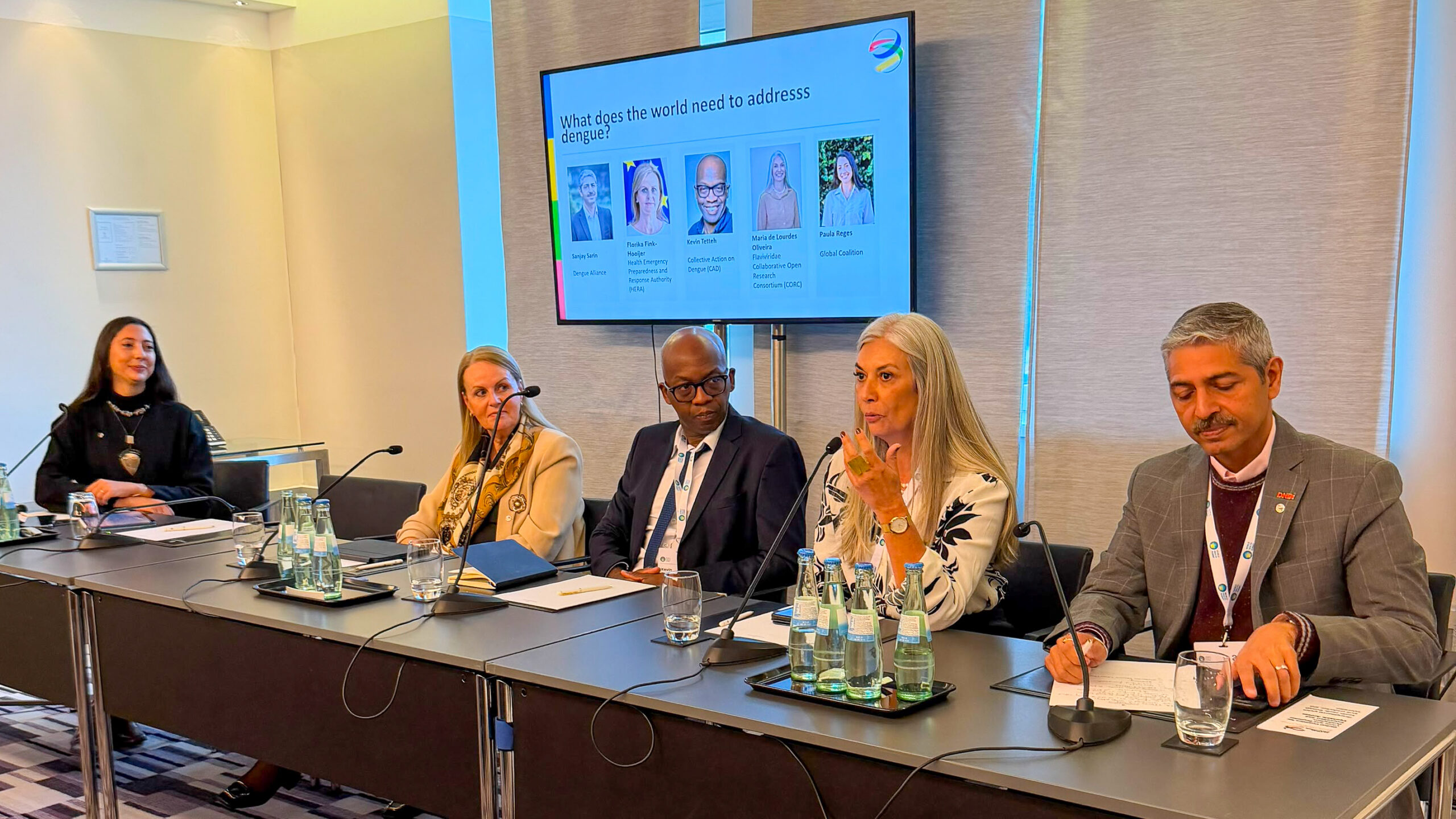
Announced at the World Health Summit 2026 in Berlin, the proposals cover vaccines, therapeutics, diagnostics and vector control technologies, marking a major milestone in the Coalition’s first Call for Proposals.
Berlin – The Global Coalition for Local and Regional Production, Innovation and Equitable Access announced five shortlisted proposals to advance to the next phase of its first Call for Proposals, focused on dengue health technologies, during a side event at the World Health Summit 2026 in Berlin, Germany.
The announcement marks an important step towards translating international cooperation into concrete initiatives that can strengthen local and regional production, foster innovation and expand equitable access to health technologies, particularly in developing countries.
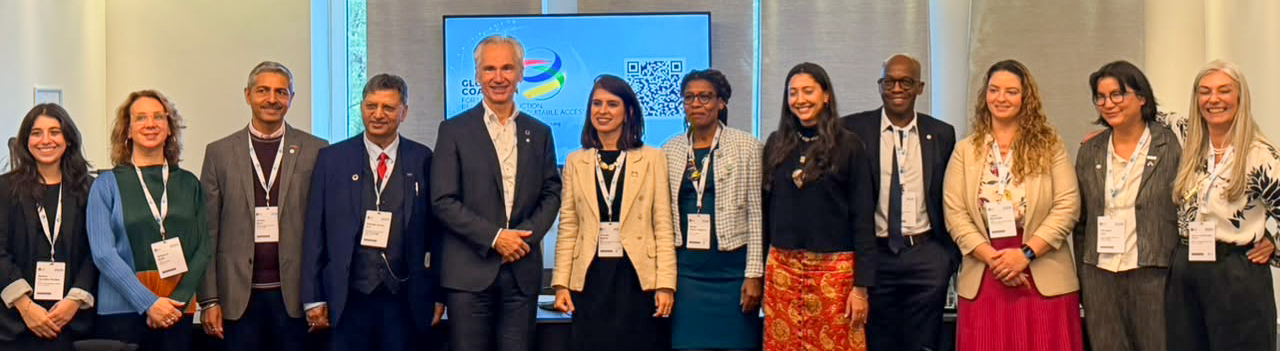
Participants at the Global Coalition’s side event during the World Health Summit 2026 in Berlin, Germany, on 11 October. Photo: The Global Coalition.
Following a rigorous evaluation process involving the Coalition’s Project Selection and Monitoring Subcommittee, Advisory Committee and Steering Committee, five proposals were shortlisted from 25 submissions, of which 23 were eligible.
The five shortlisted proposals are:
- Panacea Biotec Ltd. – A single-dose tetravalent dengue vaccine, focusing on regional manufacturing and technology transfer.
- Drugs for Neglected Diseases initiative (DNDi) – Development of dengue therapeutics, including a monoclonal antibody treatment.
- Estações Disseminadoras de Larvicida Ltda. (EDL Brasil) – Smart larvicide dissemination stations for dengue vector control.
- Shanghai GeneoDx Biotech Co., Ltd. – A portable diagnostic platform designed for resource-limited settings.
- World Mosquito Program – Local production of Wolbachia-carrying mosquito eggs to prevent dengue outbreaks in West Africa.
The proposals reflect the diversity of technological approaches needed to address dengue, combining prevention, diagnosis, treatment and vector control with opportunities to strengthen regional production capacities.
A rigorous selection process with global participation
The Coalition’s first Call for Proposals attracted 25 submissions involving 91 institutions, including lead applicants and co-applicants. Of these, 23 proposals met the eligibility criteria. The submissions represented 24 lead institutions based across five regions: Asia (10), the Americas (7), Europe (4), Africa (2) and the Middle East (1).
The proposals also reflected a broad range of technological approaches to addressing dengue, including 11 proposals focused on diagnostics, 10 on vector control and other technologies, three on vaccines and one on therapeutics.
This diversity highlights the potential for innovation and international cooperation to address different aspects of dengue prevention, detection and treatment.
The selection process extended over several months, beginning with the launch of the Call on 24 March and the submission deadline on 31 July.
Following a technical assessment by the Project Selection and Monitoring Subcommittee, which submitted its final report on 9 September, the Advisory Committee reviewed the proposals during its meeting in Lisbon on 17–18 September, reaching a recommendation of five proposals that was submitted to the Steering Committee.
The Steering Committee subsequently deliberated on 7 October, confirming the five proposals that would advance to the next phase, ahead of their public announcement in Berlin.
From international cooperation to concrete action
In a video message opening the event, Alexandre Padilha, Brazil’s Minister of Health and President of the Global Coalition, highlighted the importance of transforming the Coalition’s vision into practical initiatives.
He recalled its launch during the World Health Assembly in Geneva in 2025 and emphasized that dengue was deliberately chosen as the first challenge, given its growing global impact and the effects of climate change on disease transmission.
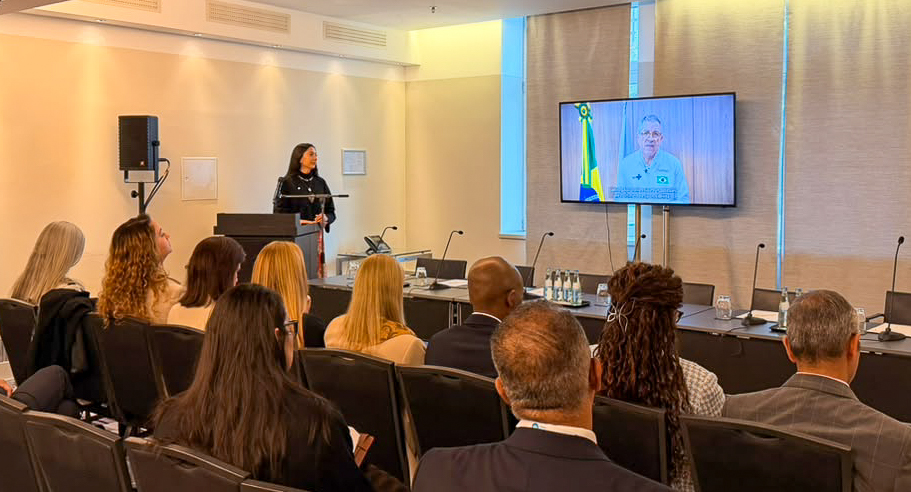
Alexandre Padilha, Brazil’s Minister of Health and President of the Global Coalition, delivers a video message opening the event at the World Health Summit 2026. Photo: The Global Coalition.
Padilha stressed that addressing dengue requires a comprehensive response integrating vector control, vaccines, therapeutics and diagnostics, supported by international cooperation and stronger health systems.
He also underscored the importance of expanding production and innovation capacities in the Global South to strengthen health security, resilience and equity.
“Innovation without access is not innovation. It’s injustice,” he said, emphasizing the need to ensure that scientific progress reaches the populations who need it most.
The event also featured a panel discussion on the challenges and opportunities for advancing dengue technologies worldwide, moderated by Paula Reges, Special Advisor to the Global Coalition.
Participants included Sanjay Sarin, representing the Dengue Alliance; Florika Fink-Hooijer, Director-General of the European Commission’s Health Emergency Preparedness and Response Authority (HERA); Kevin Tetteh, from FIND and Co-Chair of the Collective Action on Dengue (CAD); and Maria de Lourdes Aguiar Oliveira, Vice-President of Global Health and International Relations at Fiocruz and Coordinator of the Flaviviridae Collaborative Open Research Consortium (CORC).
The discussion addressed gaps in dengue prevention, diagnosis and treatment, the importance of coordinated research and investment, and opportunities to ensure that innovation responds to the needs of populations most affected by the disease.
A new phase for the Coalition
During the announcement session, Luana Bermudez, General Manager of the Global Coalition, presented an overview of the selection process, highlighting the participation of institutions from different regions and the technical assessment carried out over recent months.
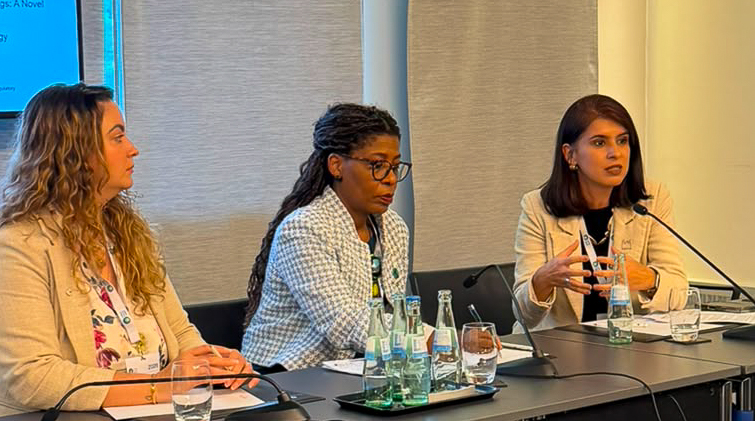
Luana Bermudez, General Manager of the Global Coalition; Marise Nogueira, from Brazil’s Ministry of Health; and Priscila Ferraz, Deputy Executive Secretary of the Global Coalition, during the announcement of the shortlisted proposals. Photo: The Global Coalition.
The proposals were formally announced by Marise Nogueira, Head of the Special Advisory Office for International Affairs at Brazil’s Ministry of Health, who highlighted the quality of the submissions and the Coalition’s capacity to mobilize institutions and initiatives across different parts of the world.
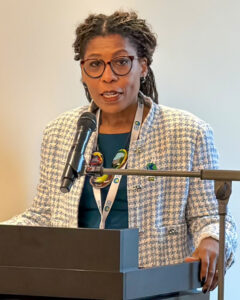
Marise Nogueira, Head of the Special Advisory Office for International Affairs at Brazil’s Ministry of Health, announces the five shortlisted proposals from the Global Coalition’s first Call for Proposals. Photo: The Global Coalition.
Nogueira emphasized that the diversity of shortlisted technologies reflects the complexity of dengue as a global public health challenge. She also noted that the announcement represents a pre-selection rather than final approval for implementation or funding, and that the proposals will undergo further assessment before final decisions are made.
Closing the event, Priscila Ferraz, Deputy Executive Secretary of the Global Coalition, highlighted the importance of this milestone in translating commitments made since Brazil’s G20 Presidency in 2024 into practical initiatives.
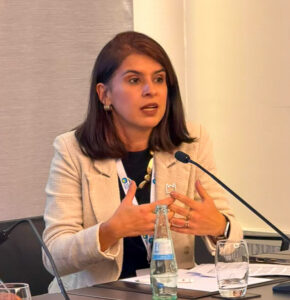
Priscila Ferraz, Deputy Executive Secretary of the Global Coalition, delivers closing remarks, highlighting the next steps towards transforming the shortlisted proposals into concrete solutions. Photo: The Global Coalition.
Representing Executive Secretary Mario Moreira, she acknowledged the contributions of Coalition members, technical experts and participating institutions throughout the process.
“The key challenge now is how to turn these proposals into reality,” she said, emphasizing that access, financing and effective implementation will be essential in the next phase.
The shortlisted proposals will now undergo detailed technical feedback and refinement, supported by the Coalition’s Subcommittees on Equitable Access and on Financing and Sustainability.
Revised proposals will subsequently be assessed by the Advisory Committee and Steering Committee before final decisions on which projects the Coalition will support for implementation.
About the five shortlisted proposals
Panacea Biotec Ltd. – Equitable Regional Development, Manufacturing and Access Program for a Single-Dose Tetravalent Dengue Vaccine
The proposal focuses on a single-dose tetravalent dengue vaccine in late-stage Phase III clinical trials. It aims to scale up production and facilitate technology transfer, strengthening regional manufacturing capabilities and expanding access to dengue vaccines in developing countries where dengue is endemic.
Drugs for Neglected Diseases initiative (DNDi) – DENGUE-PACT: Platform for Accelerated Therapeutics, Biomarker-Enabled Care, and Epidemic-Responsive Deployment
The initiative focuses on developing dengue treatments, including a Phase III clinical trial of a monoclonal antibody therapy. Targeting Latin America and Southeast Asia, it seeks to advance therapeutic innovation and strengthen the capacity to respond to dengue outbreaks.
Estações Disseminadoras de Larvicida Ltda. (EDL Brasil) – From Climate Signal to Health Action: Smart Larvicide Dissemination Stations for Dengue Control
The proposal combines smart larvicide dissemination stations with digital management tools, training and technical support to improve mosquito vector control. It targets implementation in South America and Portuguese-speaking African countries, supporting locally adapted approaches to dengue prevention.
Shanghai GeneoDx Biotech Co., Ltd. – Integrated POCT Platform for Resource-Limited Settings: A Novel System for Dengue Virus Infection Detection
The project proposes a portable diagnostic platform integrating sample processing, PCR testing and automated results. Designed for resource-limited settings, the technology aims to strengthen dengue detection capabilities, particularly in Southeast Asia and the Western Pacific.
World Mosquito Program – WA-STOP Dengue: West African Sovereign Technology for Outbreak Prevention
The initiative proposes establishing a large-scale facility in West Africa to produce mosquito eggs carrying Wolbachia bacteria, which can reduce dengue transmission. Through technology transfer and the development of local operational capacities, the project seeks to strengthen regional autonomy and support sustainable dengue prevention.
The five proposals represent an important milestone for the Global Coalition’s first pilot initiative, demonstrating how international partnerships can help advance innovation, strengthen local and regional production and promote more equitable access to health technologies.
The proposals are presented in submission order, not in order of merit or priority. Shortlisting does not constitute final approval or a funding commitment.