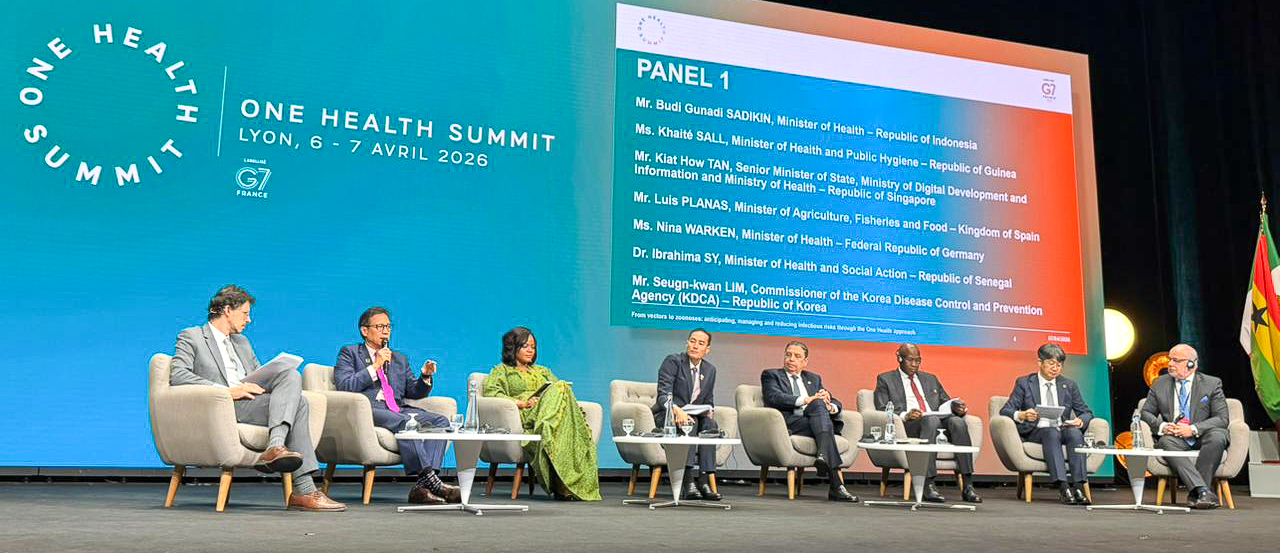
A representative of the Global Coalition for Local and Regional Production, Innovation and Equitable Access called for urgent, coordinated action to expand access to dengue health technologies, as heads of government, ministers, and global health leaders gathered in Lyon for the One Health Summit, held under France’s G7 health agenda.
Speaking at a high-level event on advancing dengue response through a One Health approach, Marco Nascimento emphasized the need to move “from discussion to action” in the face of growing and increasingly complex dengue outbreaks.
Representing the Coalition’s Executive Secretariat, hosted by Fundação Oswaldo Cruz, Nascimento highlighted that the initiative – conceived by G20 Health Ministers in 2024 – aims to promote local and regional production, distributed innovation, and voluntary cooperation to ensure more equitable access to health technologies, particularly in developing countries.
A concrete step forward: first call for proposals on dengue
At the center of the Coalition’s interventions is the recent launch of its First Call for Proposals, focused on dengue as a priority global health challenge.
The call seeks to identify projects capable of strengthening local and regional production capacities and addressing persistent structural asymmetries in research, development, manufacturing, and access.
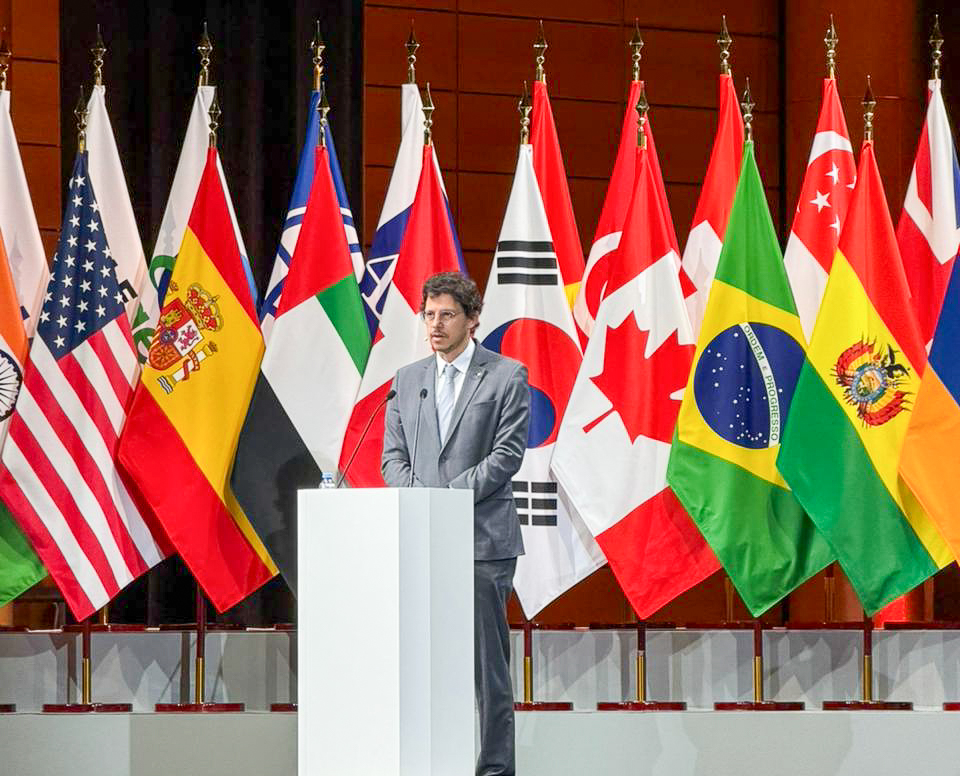
Marco Nascimento, representing the Coalition’s Executive Secretariat, attended the One Health Summit in Lyon, held under France’s G7 health agenda. Credit: Luana Bermudez / Global Coalition
“This initiative is about shifting the centre of gravity of research and development and manufacturing, while enabling efficient, equitable and affordable access to innovation,” Nascimento said.
The Coalition is looking for ready and late-stage health technologies that can deliver concrete manufacturing capacity in developing countries within five years, as well as improve supply and access.
Applicants may include governments, international organizations, public and private institutions, and non-profit organizations. Support of the Coalition may take two forms:
- Catalytic (non-financial): including partnership facilitation, strategic alignment, and endorsement
- Financial (potential): mobilized through external funding partners
Addressing a growing global threat
The intervention comes at a time when dengue is expanding in scale and frequency, while global supply chains remain fragile and many countries continue to face barriers in accessing essential tools.
While existing technologies provide a foundation, the Coalition emphasized the need both to scale up current solutions and to accelerate new approaches.
Importantly, the model underpinning the call is not limited to dengue. It is designed as a broader framework for technologies adaptable across diseases, contributing to more resilient, self-reliant health systems worldwide.
Coalition engagement within the One Health Summit and the French Presidency of the G7
The One Health Summit in Lyon, is a key moment within France’s G7 health agenda, where strengthening the role of the Coalition has been identified as a priority.
Throughout the week, the Global Coalition has been actively engaged in discussions on One Health, zoonotic diseases, and global health cooperation, including:
- Participation in the event “Advancing Dengue Response through One Health”, co-organized with the Pasteur Network and Drugs for Neglected Diseases initiative
- Participation in the thematic sessions on zoonotic reservoirs and vectors
- High-level session on the Global Coalition within the G7 Health Working Group Meeting
These engagements reflect the Coalition’s role as a platform for coordination and alignment among major global health actors.
An open invitation to collaborate
The Global Coalition took the opportunity to make a call to action for governments, institutions, and partners to engage with the initiative.
“The call for proposals is an invitation: to bring forward bold ideas, to invest in local solutions, and to work collaboratively toward shared goals,” Nascimento said.
As global health challenges become more complex and interconnected, strengthening local and regional capacity is not only a matter of equity – but a strategic imperative for the future. The COVID-19 pandemic showed us that where things are made really matters when it comes to health.