
Pact signed during Brazil’s presidency was formally launched during the World Health Assembly in Geneva
Published by Brazilian Ministry of Health on 07/11/2025 at 11:19 and updated on 07/11/2025
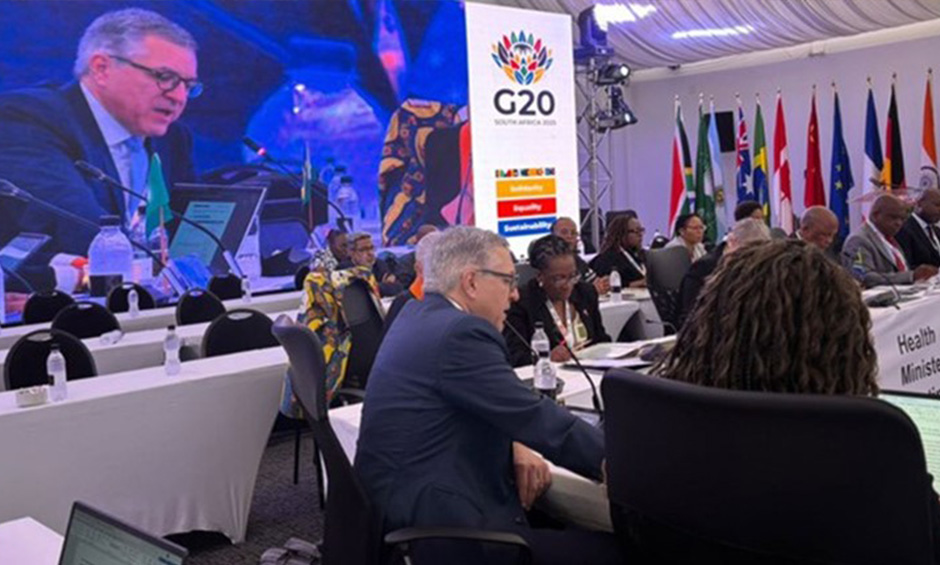
Brazil’s Minister of Health, Alexandre Padilha, today (07) presented to G20 health ministers meeting in South Africa the operational mechanism and timeline of the Global Coalition for Local and Regional Production, Innovation, and Equitable Access. The initiative was created while Brazil held the group’s presidency and was launched by G20 members during this year’s World Health Assembly in Geneva.
The coalition represents an important step toward increasing investments by the world’s 20 richest nations in the production of medicines, vaccines, and health technologies—especially for countries in the Global South. Brazil will chair the coalition for the next two years, with Fiocruz serving as its permanent executive secretariat.
According to Padilha, the coalition begins with two missions. “The first is to mobilize the world’s 20 richest nations, their companies, and their research institutions to develop and produce medicines and vaccines for neglected diseases, such as dengue, for example, which affects the Brazilian population and also impacts other parts of the world, such as Southeast Asia.”
The minister added that “the second mission is to ensure that populations that are neglected because they do not have access to the most modern cancer medicines gain what should be the responsibility of G20 countries that are part of the coalition: access to health care. We want to ensure that these populations have access to extremely expensive medicines for cancer and cardiovascular diseases, and that these medicines become more affordable for our populations. This also means producing more of these medicines in Brazil and establishing technology transfer partnerships with our country.”
Since its launch in Geneva, efforts have focused on defining procedures and partnerships among countries and companies that will guide activities and on identifying priority diseases for investment by governments and businesses. International health organizations and funds will also be invited to join the coalition and may participate in the advisory committee.
Brazil’s Commitment
In his remarks at the final plenary session, the Brazilian minister reiterated Brazil’s commitments to the global health agenda. “The G20 is a key forum for reaffirming Brazil’s commitment to multilateralism and support for the World Health Organization (WHO). Following the adoption of the Pandemic Agreement, Brazil remains fully committed to negotiating the PABS Annex (Pathogen Access and Benefit-Sharing) and to its successful conclusion at the next World Health Assembly,” said the minister.
“If, on the one hand, we must establish a fair and equitable system to ensure that no one is left behind waiting for vaccines, therapies, and diagnostics when the next pandemic or global health emergency arises, on the other hand, we must build resilient health systems and combat misinformation,” Padilha noted.
Governance and Investments
The Brazilian minister also presented the coalition’s proposed governance structure, with member countries forming the Steering Committee, international public and private organizations and funds serving as the Advisory Committee, and Fiocruz acting as the permanent executive secretariat. The Steering Committee will be established by the end of the month, and the first round of partnership agreement consolidation in Brazil is scheduled for March 2026, focused on the production of health technologies.
In addition to leading this international cooperation platform, Brazil hopes to attract international investment and strengthen its national production capacity, leveraging regional leadership for the Brazilian and Latin American markets and sharing with Global South partners to serve African and Southeast Asian markets.
G20 health ministers recognized the importance of advancing the coalition’s work to promote access to vaccines, therapeutics, diagnostics, and other health technologies, and to collaborate with strategic actors to mobilize financing for projects.